USP Chapter <800> – Handling Hazardous Drugs (HDs)
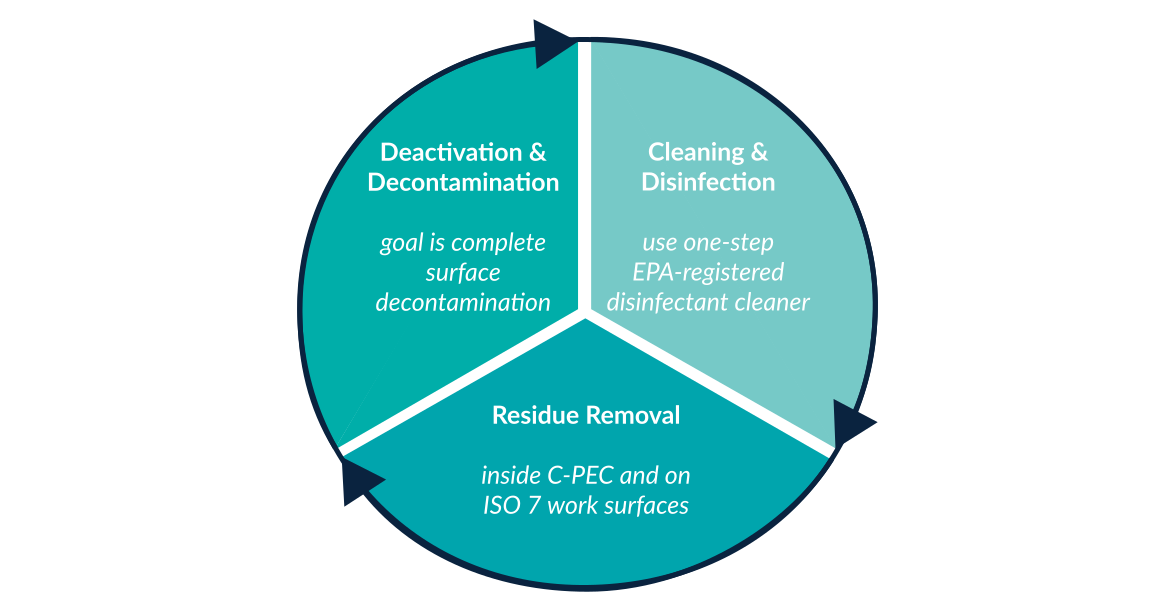
USP <800> is focused on keeping workers, patients and the environment safe from the harmful effects of hazardous drug (HD) residues. The chapter also requires compliance with USP <797> which focuses on preventing the introduction of microbial contamination to compounded sterile preparations. When performing cleaning activities inside an HD sterile compounding environment, both of these goals must be accomplished without sacrificing worker or patient safety. Though both USP chapters provide information about cleaning, at this time, they do not provide a straightforward guide to practical cleaning. The graphic below depicts a 3 step process.
Our recommendations
Our specialists have developed a specific protocol for decontamination of HD residues in sterile compounding settings.
Click on the numbers in the graphic to explore the three steps and see how it works.
Step 1: Deactivate and Decontaminate
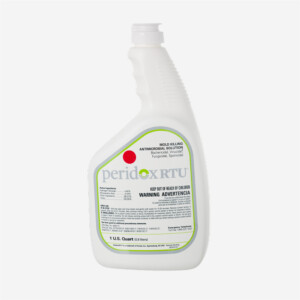
Surface contamination with HD residues, whether inactive or active must first be removed. There is no universal chemical to deactivate HDs and for some HDs no chemical is known to deactivate the drugs, therefore USP <800> states the goal is to achieve complete surface decontamination (removal of active or inactive HDs from the target surface to a disposable wipe which can be safely disposed in trace HD waste). Users should always perform an HD residue risk assessment of their surfaces to determine whether they want to use a 1 or 2 pass procedure using PeridoxRTU to decontaminate surfaces with HDs.
Step 2: Clean and Disinfect
Once the target surface has been decontaminated, cleaning and disinfection can take place. By using an EPA-registered, one-step disinfectant cleaner such as PeridoxRTU, surfaces can be cleaned and disinfected in addition to decontaminated. If PeridoxRTU, a sporicidal agent, is used for this purpose, a 3-minute contact time must be achieved.
Step 3: Remove Residues
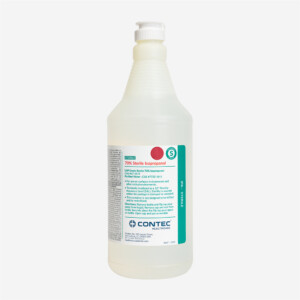
Lastly USP <797> requires sterile 70% IPA (sIPA) to be wiped on surfaces inside any primary engineering control to remove any cleaning agent residues. It is best practice to wipe all work surfaces both inside and outside the C-PEC with sIPA. Many surfaces inside the sterile compounding buffer room may not be made of the highest grade of stainless steel so wiping these surfaces with sIPA may help to prevent corrosion of surfaces especially at the weld points. Wiping with sIPA may also remove additional bioburden through its mechanical action.